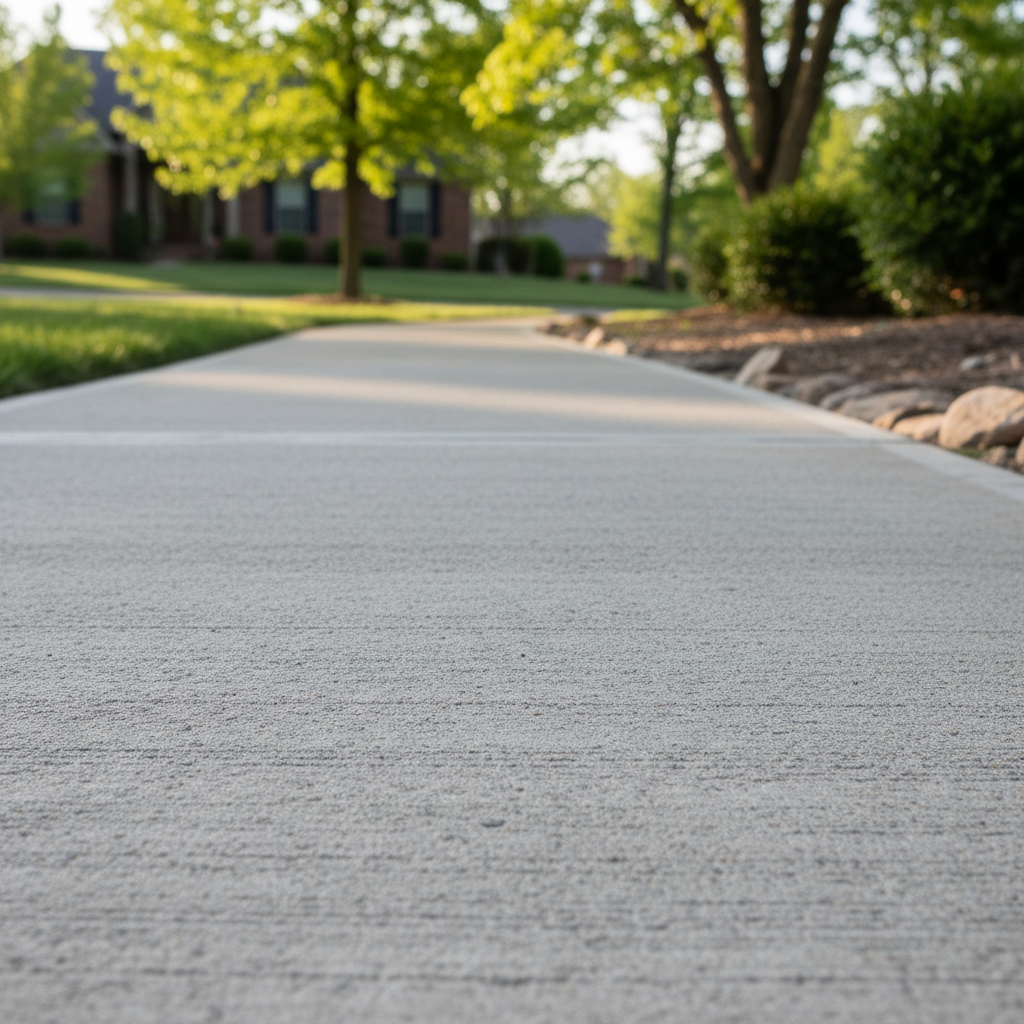
Alright, let's talk concrete sidewalks. I get a lot of the same questions from folks around Spokane, whether they're in the older South Hill neighborhoods or the newer developments out towards Republic Road. It's a big investment, and you want it done right, or at least understand what's going on with the concrete you've already got. So, I'm going to hit the most common questions I hear, straight up.
Why Do Concrete Sidewalks Crack?
This is probably the number one question I get. Look, concrete cracks. It just does that, you know? It shrinks as it dries, and that creates stress. We try to control where it cracks by putting in control joints (those lines you see cut into the concrete). But even with those, you'll still see other cracks pop up. Things like tree roots pushing up from underneath, heavy vehicles driving over it, or even just the freeze-thaw cycles we get here in Spokane can all cause cracks. If water gets into a small crack, freezes, and expands, it's going to make that crack bigger. That's why good drainage and proper sealing are so important.
What's the Difference Between Control Joints and Expansion Joints?
Good question, because people often confuse them. Control joints, like I just mentioned, are those cuts we make in the concrete. They're usually about a quarter of the slab's thickness deep, and they're there to create a weakened plane. This means that when the concrete shrinks and cracks, it does it in a straight, predictable line. It's really about controlling the inevitable and making it look better. Expansion joints, on the other hand, go all the way through the concrete slab. We typically fill them with a compressible material like asphalt, cork, or fiberboard. We put these where the concrete meets another structure, say, your house foundation, a driveway, or another sidewalk section. Their job is to let the concrete expand and contract with temperature changes without pushing against those other structures and causing damage.
How Long Does a Concrete Sidewalk Last?
If we install it right and you maintain it properly, a concrete sidewalk can easily last 30 to 50 years. I've seen some older sidewalks around Browne's Addition that are still holding up pretty well, even if they're a bit worn. The lifespan really depends on a few things: the quality of the mix, how well we prepared the base, proper curing, and how much abuse it takes. If you've got heavy traffic, harsh chemicals, or constant water issues, that's going to shorten its life. But generally, it's a very durable option.
Do I Need to Seal My Concrete Sidewalk?
Absolutely, yes. Think of it like this: your concrete is porous. It's got tiny little holes that can soak up water, oil, and other stuff. Sealing creates a protective barrier. It helps prevent water intrusion, which is huge for preventing freeze-thaw damage (especially with our Spokane winters), and it makes the concrete more resistant to stains. It also helps with surface wear. I usually recommend sealing new concrete after it's fully cured (give it at least 28 days) and then resealing every 2-5 years, depending on the sealer type and how much traffic it gets. It's a small investment that pays off big time in extending your sidewalk's life.
What's the Best Way to Clean a Concrete Sidewalk?
For general cleaning, a good stiff broom and a hose with some dish soap usually does the trick for everyday dirt. For tougher stains like oil or mildew, you might need something stronger. A pressure washer can be great, but be careful with the pressure setting; too high, and you can actually damage the concrete surface. Always test a small, inconspicuous area first. For really stubborn stuff, there are specific concrete cleaners out there. Just make sure whatever you use is safe for your concrete and won't strip any existing sealer.
Can I Repair a Cracked or Uneven Sidewalk, or Do I Need to Replace It?
It depends on how bad it is. Small, hairline cracks can often be filled with a concrete crack filler to prevent water from getting in. If you've got a section that's just a little uneven due to settlement, sometimes we can use a process called mudjacking or polyjacking to lift and level it. This is where we pump a slurry or foam underneath the slab to raise it back into place. It's a lot less disruptive and cheaper than tearing out and replacing everything. However, if the concrete is extensively cracked, crumbling, or has significant heaving from tree roots or severe subgrade issues, replacement is often the only long-term solution. We'll always assess it honestly for you at Elite Concrete Solutions and tell you what we think is the best approach.
How Do I Prevent Tree Roots from Damaging My Sidewalk?
This is a common issue, especially with mature trees. The best prevention is to plant trees far enough away from your sidewalks and foundations. If you're planting new trees, choose species with non-invasive root systems. For existing trees that are already causing problems, sometimes we can install root barriers. These are physical barriers placed in the ground to redirect root growth downwards and away from the concrete. In severe cases, careful root pruning might be an option, but you'll want to consult with an arborist first to make sure you don't harm the tree. Sometimes, unfortunately, the only solution for a badly damaged sidewalk is to remove the problem roots (if possible) and replace the affected sections of concrete, ensuring proper root barriers are installed during the new pour.