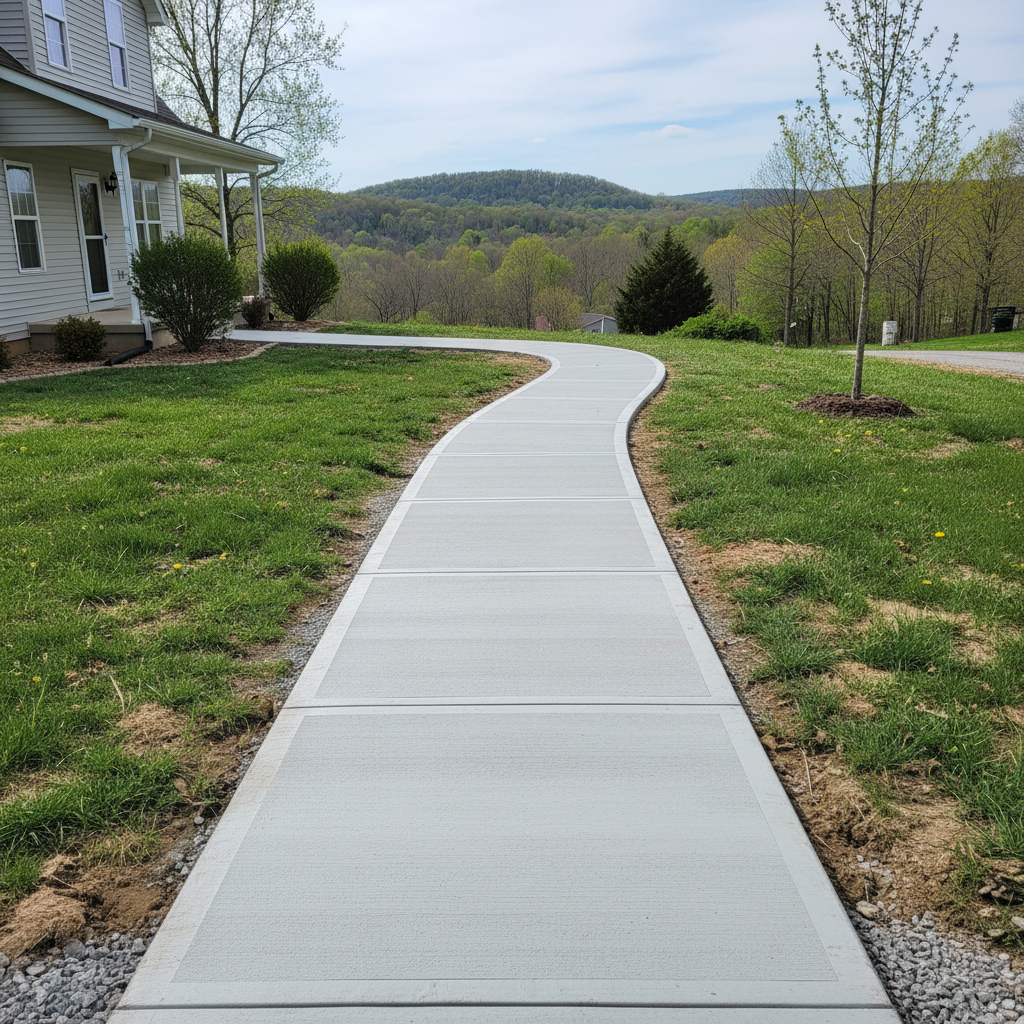
What Really Drives Sidewalk Costs?
Let's talk about concrete sidewalks. You need one, you want to know what it'll cost. It's not just a flat rate per square foot, though that's where most folks start. There are a few big things that really push the price up or down, and if you understand them, you won't be surprised when you get a quote.
- Size and Thickness: This one's obvious, right? A bigger sidewalk uses more concrete and takes more labor. But thickness matters too. A standard residential sidewalk is usually 4 inches thick. If you're planning on driving a vehicle over it, even occasionally, you'll need 6 inches, and that's a significant jump in material and cost.
- Site Prep: This is huge. Is the ground already pretty level and clear? Or do we need to tear out an old sidewalk, remove bushes, or do a lot of grading? If we hit a bunch of rocks common in some of the older Spokane neighborhoods like the South Hill, that's extra work and equipment. Good prep is critical for a long-lasting sidewalk, so don't skimp here.
- Accessibility: Can a concrete truck get right up to where we're pouring? If we have to wheelbarrow concrete a long distance from the truck, that's more labor. If it's a tight spot or a steep incline, it adds time and effort.
- Reinforcement: Most sidewalks should have rebar or wire mesh. It helps prevent cracking and gives the concrete strength. It's an added cost, but it's worth every penny for durability.
- Finish: A basic broom finish is standard and economical. If you want something decorative, like stamped concrete or an exposed aggregate finish, that's a whole different ballgame and will cost more due to specialized materials and labor.
Typical Cost Ranges in Spokane, MO
Alright, let's get down to numbers. For a standard 4-inch thick concrete sidewalk with a broom finish, including basic site prep and wire mesh reinforcement, you're generally looking at $8 to $15 per square foot here in Spokane. That's a pretty wide range, I know, but it accounts for all those factors I just mentioned.
So, a simple 100-square-foot sidewalk (say, 25 feet long by 4 feet wide) could run you anywhere from $800 to $1,500. A more complex job, maybe 300 square feet with some tricky access or a bit more grading, could be $2,400 to $4,500.
If you're going for a 6-inch thick sidewalk, maybe for a driveway extension or an area that'll see heavier loads, bump that up to $10 to $18 per square foot. And if you're thinking decorative, like stamped concrete, you're probably looking at $15 to $30+ per square foot, depending on the pattern and colors.
What Should a Good Quote Include?
When you get a quote from a contractor, make sure it's detailed. It shouldn't just be a single number. Here's what I always include in my quotes at Elite Concrete Solutions, and what you should expect from anyone:
- Square Footage: Clearly states the total area of concrete being poured.
- Thickness: Specifies if it's 4-inch, 6-inch, or whatever was agreed upon.
- Reinforcement: Mentions rebar or wire mesh.
- Site Preparation: Details what's included – excavation, grading, old concrete removal, hauling away debris. This is where a lot of hidden costs can pop up if not specified.
- Concrete Mix: What strength concrete (e.g., 3000 psi, 4000 psi) will be used.
- Finish Type: Broom finish, smooth trowel, stamped, etc.
- Expansion Joints/Control Joints: Where they'll be placed to prevent cracking.
- Permits: Who is responsible for pulling any necessary city permits.
- Cleanup: What the contractor will do to leave your property tidy.
- Warranty: What kind of guarantee they offer on their work.
How to Avoid Overpaying for Your Sidewalk
Nobody wants to get ripped off. Here's my advice:
- Get Multiple Quotes: Don't just call the first guy you see. Get at least three detailed quotes. This helps you compare apples to apples and understand the market rate for your specific project.
- Ask for References: A good contractor will happily provide them. Call those references and ask about their experience.
- Check for Licensing and Insurance: This is non-negotiable. Make sure they're properly licensed and insured. If they're not, you could be liable if something goes wrong.
- Don't Always Go for the Lowest Bid: The cheapest quote often means corners are being cut somewhere. Maybe they're using lower quality concrete, skipping reinforcement, or not doing proper site prep. A good job costs what it costs.
- Understand the Contract: Read every word. If you don't understand something, ask. Make sure everything you discussed is written down.
- Avoid Large Upfront Payments: A reputable contractor might ask for a reasonable deposit, but be wary of anyone demanding a huge percentage of the total cost before any work starts.
Doing your homework upfront will save you headaches and money in the long run. A well-poured concrete sidewalk should last you decades, so it's an investment worth doing right.